

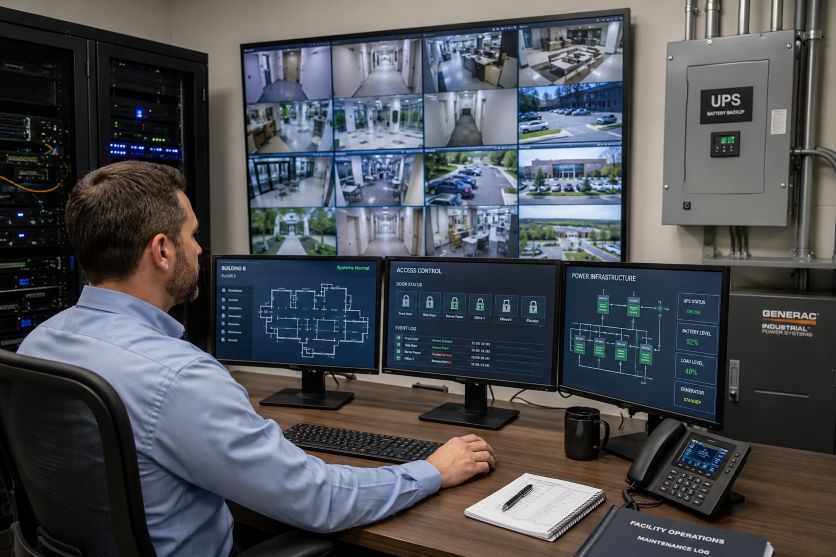
The global smart building market continues to expand as organizations invest in connected technologies designed to improve efficiency, safety, and operational control. While discussions about smart buildings often focus on automation, data analytics, and energy management, electrical reliability remains one of the most important foundations of physical security. Security technologies depend on stable electrical infrastructure to function correctly. Without dependable power systems, even advanced surveillance cameras, access controls, and monitoring platforms can become ineffective. This is one reason many property owners consult a residential electrician near Glen Mills when evaluating the performance and resilience of building systems.
Research from MarketsandMarkets indicates that demand for smart building technologies continues to grow due to increased focus on security, operational efficiency, and occupant safety. At the same time, experts from National Institute of Standards and Technology (NIST) emphasize that resilient infrastructure is essential for maintaining the reliability of connected building systems. Electrical networks serve as the backbone that supports these technologies.
For facility managers and property owners, understanding the relationship between electrical systems and physical security can help reduce risks and improve long-term performance. The following five areas highlight how electrical reliability directly supports modern security technologies.
1. Reliable Power Keeps Surveillance Systems Operational
Video surveillance systems are often the first line of defense against unauthorized access, theft, and vandalism. Cameras, network video recorders, storage devices, and monitoring software all depend on a continuous power supply.
Data from ASIS International, a leading security organization, shows that surveillance systems play a significant role in incident detection and post-event investigations. However, these benefits are only available when systems remain operational.
Electrical interruptions can create blind spots during critical moments. Even short outages may affect camera recordings, network connectivity, or video storage functions. Proper circuit design, surge protection, and routine electrical inspections help reduce these risks and improve system availability.
Many smart buildings also use Power over Ethernet (PoE) technology to support security cameras. While PoE simplifies installation, it still relies on stable electrical infrastructure to ensure consistent performance.
2. Access Control Systems Depend on Electrical Stability
Electronic access control systems have become standard features in commercial and residential smart buildings. Keycards, biometric scanners, smart locks, and mobile credential systems help regulate who can enter specific areas.
Research published by Security Industry Association (SIA) notes that electronic access management improves both security and operational efficiency. Yet these systems require dependable electrical support to function properly.
Power disruptions can prevent doors from locking or unlocking as intended. Depending on the design, some systems may fail open while others fail closed. Either scenario can create operational challenges and security concerns.
Reliable electrical distribution, backup batteries, and regular testing help ensure that access control devices remain functional during both routine operations and emergency situations.
3. Backup Power Protects Security During Emergencies
Unexpected power outages remain a concern for both residential and commercial properties. Severe weather events, equipment failures, and utility disruptions can interrupt critical security operations.
Experts from the Federal Emergency Management Agency (FEMA) recommend backup power solutions as part of broader emergency preparedness planning. Generators and uninterruptible power supply (UPS) systems can provide temporary power to essential security equipment during outages.
Backup power supports multiple security functions, including:
- Video surveillance systems
- Access control platforms
- Alarm systems
- Emergency communication equipment
- Building monitoring networks
Without backup power, security systems may become unavailable precisely when they are needed most. Smart building operators often prioritize these systems when developing continuity and emergency response plans.
Electrical professionals can help identify critical loads and determine which systems require priority backup support during outages.
4. Monitoring Systems Rely on Consistent Electrical Performance
Smart buildings increasingly use sensors and monitoring technologies to detect security threats, equipment issues, and environmental changes. These systems gather data continuously and often operate around the clock.
Research from IBM and International Energy Agency (IEA) highlights the growing role of connected sensors in building management and infrastructure monitoring. These devices can identify unusual activity, equipment malfunctions, and safety concerns before they become larger problems.
However, monitoring systems are only as reliable as the infrastructure supporting them. Voltage fluctuations, overloaded circuits, and aging electrical components can interfere with sensor performance and communication networks.
Maintaining electrical reliability helps ensure that monitoring platforms deliver accurate information and timely alerts. Consistent power quality is especially important for facilities that depend on automated responses and remote management capabilities.
5. Electrical Maintenance Strengthens Overall Security Resilience
Security technologies often receive regular software updates and performance reviews. Electrical infrastructure deserves the same level of attention. Aging panels, deteriorating wiring, and overloaded circuits can introduce vulnerabilities that affect security operations.
Guidance from the National Fire Protection Association (NFPA) emphasizes the importance of electrical inspections and preventive maintenance in reducing operational risks. Routine evaluations can identify issues before they lead to equipment failures or service interruptions. Similar principles are discussed in articles examining technology’s role in modern home construction, where early infrastructure planning helps support both safety and long-term building performance.
Qualified electrical specialists help assess system capacity, inspect critical components, and verify that security-related equipment receives reliable power. This proactive approach supports both safety and long-term system performance.
For many properties, maintaining dependable electrical infrastructure is a shared responsibility involving facility managers, security teams, and licensed electrical contractors. Collaboration between these groups often leads to stronger protection strategies and fewer unexpected disruptions.
Key Takeaways for Property Owners and Facility Managers
Physical security and electrical reliability are closely connected in modern smart buildings. Surveillance cameras, access controls, monitoring platforms, alarms, and emergency communication systems all depend on stable electrical performance.
Property owners can improve security resilience by focusing on several key practices:
- Schedule regular electrical inspections and maintenance.
- Evaluate backup power capabilities for critical systems.
- Protect sensitive equipment from surges and power fluctuations.
- Monitor electrical loads as security technologies expand.
- Coordinate security planning with qualified electrical professionals.
As smart building technologies continue evolving, dependable electrical infrastructure will remain a foundational requirement for effective security. Advanced devices and sophisticated software provide valuable protection, but their performance ultimately depends on reliable power delivery. Facility managers who recognize this connection are better positioned to support safety, operational continuity, and long-term building resilience.