
 Smart homes are common, with voice assistants, smart speakers, security cameras, thermostats, and connected appliances now part of daily life. While these add convenience, they create challenges for professional cleaners, who must protect electronics, avoid changing device settings, and respect privacy. Professional cleaners use clear practices to clean homes and keep smart devices safe, which is why many homeowners choose services from a trusted home care provider in Saudi Arabia to ensure both cleanliness and protection for their smart technology.
Understanding the Devices in the Home
Before cleaning begins, experienced cleaners take a moment to identify smart devices around the property. These may include countertop voice assistants, smart displays, cameras near doorways, robot vacuum docks, smart lighting hubs, or connected kitchen appliances.
These devices contain microphones, sensors, and exposed ports. They are sensitive to moisture, cleaning chemicals, and movement. Cleaners treat them differently from ordinary household items.
Some cleaning companies ask homeowners to point out important devices during the first visit. This walkthrough helps the team avoid mistakes and understand which items should not be moved or unplugged.
Using the Right Cleaning Methods
Smart devices require gentle cleaning methods. Professional cleaners rarely spray chemicals directly onto electronics. Instead, they spray the product onto a cloth first, then carefully wipe nearby surfaces.
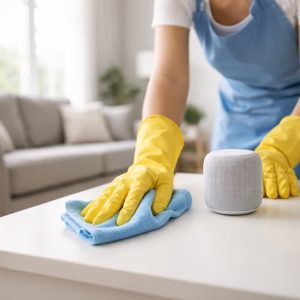
Microfiber cloths are commonly used for electronics. They collect dust without scratching and do not leave fibers, making them ideal for screens, speakers, and docks.
When working near smart displays or touchscreens, cleaners usually use dry or slightly damp microfiber cloths. Excess moisture can seep into ports or speaker holes, damaging the device. Air dusters or soft brushes remove dust from vents and small openings without pressure.
Avoiding Moisture and Liquids
Since water and electronics do not mix well, professional cleaners are trained to control the amount of liquid used when cleaning areas with smart devices.
For example, when wiping a kitchen counter that holds a smart speaker, cleaners may briefly move the device to clean underneath it. They dry the surface completely before placing the device back.
In bathrooms, extra care is taken with smart mirrors, Bluetooth speakers, or humidity sensors. Because steam and cleaning sprays can collect on these surfaces, wiping them dry afterward helps protect the device.
The goal: keep liquids away from openings, ports, and power connections.
Not Disconnecting or Reconfiguring Devices
Another important rule is to avoid changing how devices are set up. Professional cleaners usually do not unplug routers, smart hubs, or connected appliances unless the homeowner specifically asks them to.
Disconnecting devices can interrupt home networks, security systems, or routines. For example, unplugging a smart hub may disable lights, alarms, or door locks.
If cleaners move a device to clean underneath, they return it exactly where it was and avoid pressing buttons or touching screens unless needed.
This careful approach ensures the homeowner’s smart system continues to work normally after the cleaning is complete.
Respecting Cameras and Privacy
Smart homes often include indoor or doorbell security cameras. Professional cleaning teams understand that these devices may be recording while they work.
Reputable cleaning companies train staff to maintain professionalism in areas where cameras are present. Unless they receive clear instructions from the homeowner, cleaners avoid covering cameras or adjusting their angle.
At the same time, cleaners respect the homeowner’s privacy. If they notice a device recording sensitive spaces, such as bedrooms or bathrooms, they may confirm with the homeowner before cleaning around it. Clear communication keeps both sides comfortable.
Protecting Charging Stations and Cables
Smart homes have many cables. Charging docks for phones, tablets, robot vacuums, and watches sit on nightstands, desks, or counters. Loose cables can be pulled or disconnected during cleaning. Cleaners avoid tangling cords with vacuum hoses or mop handles.
When dusting charging areas, cleaners lift cords gently rather than pull them. If unplugging is needed, they reconnect to the same outlet after the area is dry.
Keeping cables organized prevents damage and avoids homeowner confusion.
Being Careful With Smart Appliances
Many modern appliances now connect to home networks. Refrigerators, ovens, washing machines, and air purifiers may include touchscreens or Wi-Fi controls.
Professional cleaners treat these appliances as electronics, not simple surfaces. They avoid soaking control panels and harsh chemicals on displays.
A mild solution and a soft cloth work best for these surfaces. Cleaners also avoid pressing control buttons while wiping panels. This prevents accidental changes to settings or cooking programs.
Communicating With the Homeowner
Communication is key to safe cleaning around smart devices. Many cleaners ask simple questions before starting work:
- Are there sensitive areas with cameras or sensors?
- Should certain devices remain plugged in at all times?
These short talks prevent confusion and help cleaners work confidently.
Homeowners may leave instructions for devices that require special care, such as expensive displays or integrated sound systems.
Training and Awareness
Professional cleaning companies often include electronics awareness in their staff training. Cleaners learn to recognize common smart devices and work safely around them.
This training covers topics such as moisture control, cable safety, and avoiding damage to sensors or microphones. It also emphasizes respect for the homeowner’s technology and privacy. As smart homes grow, this knowledge becomes essential for cleaning professionals.
Final Thoughts
Smart devices add convenience, but require extra care. Cleaners adapt by using gentle tools, limiting moisture, avoiding device interference, and communicating clearly with homeowners.
With the right approach, cleaners maintain a spotless home without disrupting technology. Careful handling and respect for smart systems maintain cleanliness and functionality.